
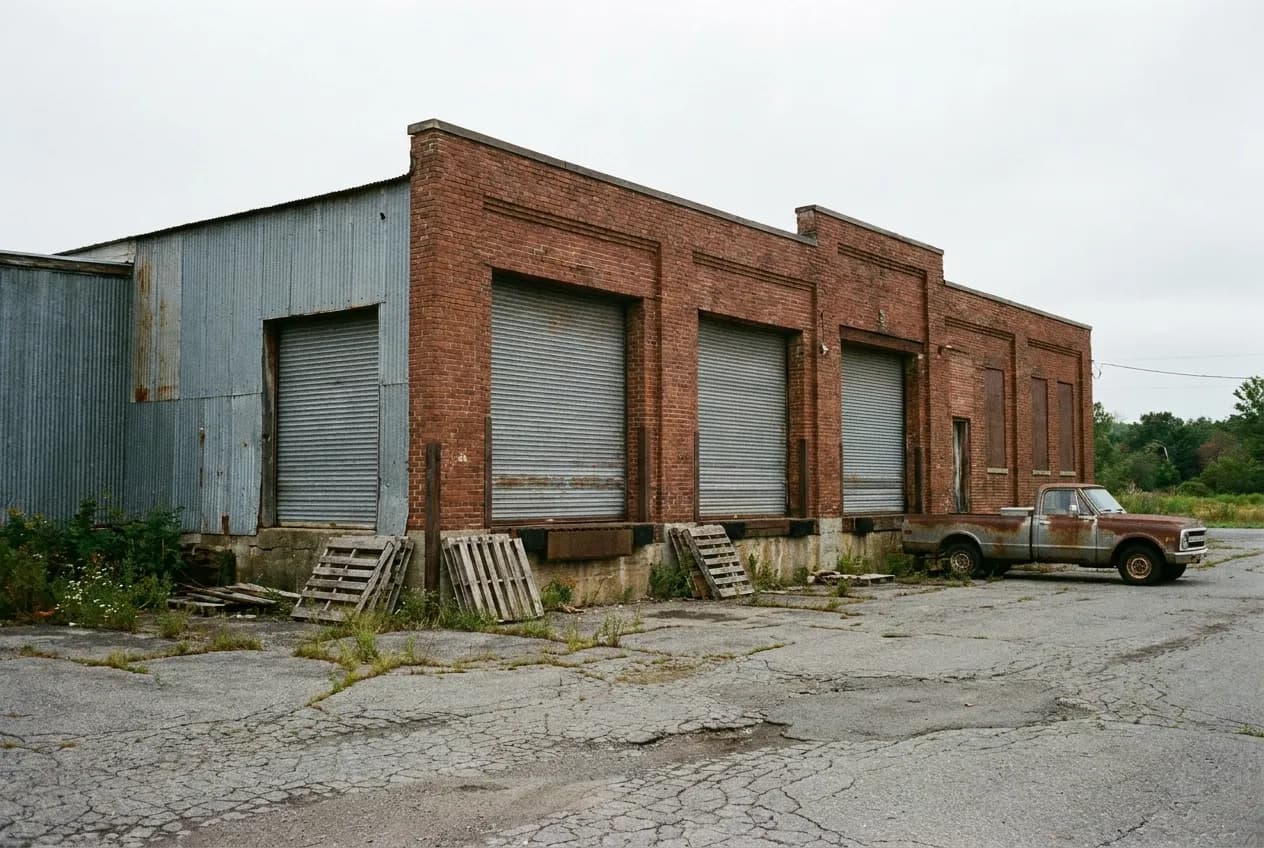
Environmental / Contaminated

Sell an Industrial Property With Environmental Issues

A known or suspected environmental problem is one of the hardest things to carry on an industrial site. A Phase I or Phase II Environmental Site Assessment flags an issue, a conventional sale stalls because the other side wants the site clean first, and the property sits. We buy environmentally impaired industrial property directly and underwrite the condition rather than asking you to remediate before you can sell.

Off-Market & Confidential
A Direct Principal Buyer
No Listing Commissions
Any Condition or Situation

The Situation

When the Site Has a History

Environmental issues on industrial land usually trace back to how a site was used over decades. Fuel storage, solvents, plating, coatings, chemical handling, or an older neighbouring use can all leave a mark that shows up in a Phase I or Phase II assessment. Once it is on paper, a conventional buyer and their lender tend to back away, and the site becomes hard to move.

  • A Phase I or Phase II flag

    An Environmental Site Assessment identifies a concern or confirms impacts to soil or groundwater, and the report becomes the reason a normal sale process stalls.

  • A deal that fell apart

    A buyer or their lender required the site to be clean, or a remediation cost estimate came in and the transaction collapsed, leaving you back where you started.

  • Historical use on the record

    Prior operations, underground tanks, or a legacy process mean the site carries a history that a retail buyer is not equipped to take on.

  • Regulatory steps ahead

    A Record of Site Condition, a remediation plan, or a reclamation step may be needed before some uses can proceed, and that pathway takes time, cost, and expertise.

A Direct, Off-Market Sale

We Buy the Problem As It Stands

An impaired site is exactly the kind of property we buy. We are a principal buyer, so you are not marketing a contaminated site to a market that will not touch it. We take on the environmental question as part of what we do, which lets you exit a property that a conventional process cannot move.

  • We underwrite the problem

    Contamination, an open Phase II, deferred remediation, or a site with a difficult history. We look at the condition and factor it into the offer instead of asking you to clean it up first.

  • Off-market and confidential

    No listing and no marketing that puts an environmental file in front of your tenants, neighbours, or competitors. The sale stays private.

  • A direct principal buyer

    You deal with the party that holds the capital and takes on the site, not a broker running a process that stalls the moment the assessment surfaces.

  • Certainty and speed

    We control our own capital, so there is no financing condition tied to a lender that is nervous about the environmental history. We close on a timeline built around the diligence the site needs.

  • No listing commissions or broker fees

    A marketed sale carries brokerage commissions and a marketing process. A direct sale to us does not.

  • Flexible deal structures

    How the environmental steps and timing are handled can be built into the structure of the deal, agreed between us up front.

Ontario & Alberta

The Environmental Framework by Province

Ontario and Alberta each have their own framework for contaminated and impaired sites. The terms and the paperwork differ, but in both provinces the environmental pathway is a specialised process, which is exactly why a site with a history is hard to sell on the open market.

Ontario

In Ontario, site condition is governed by the Record of Site Condition regime under O. Reg. 153/04, administered through the Ministry of the Environment, Conservation and Parks (MECP). A Record of Site Condition, filed on the provincial registry after the required Phase I and, where triggered, Phase II Environmental Site Assessment and any remediation or risk assessment, is often needed before a change to a more sensitive use. That process is technical and time-consuming, and it is a common reason a conventional buyer walks. We take the site with its environmental status as it is.

Alberta

In Alberta, contaminated sites fall under the Environmental Protection and Enhancement Act (EPEA). Depending on the site and the intended use, the pathway can involve a remediation certificate or, for certain lands, a reclamation certificate, alongside Phase I and Phase II assessment work. As in Ontario, this is specialist territory that a typical purchaser is not set up to navigate. We buy the property directly and take on the environmental question ourselves.

References: O. Reg. 153/04 (Records of Site Condition), MECP, Alberta remediation certificates, Alberta reclamation certificates.

Nothing on this page is legal, environmental, or engineering advice. Environmental requirements depend on the site, the history, and the intended use, and the rules change. Confirm the specifics for your property with a qualified environmental consultant and your own advisers.

How It Works

A Direct Sale in Three Steps

  1. 1

    Tell us about the property

    Send the address, the site and building details, the historical use, and any environmental reports you already have, including any Phase I or Phase II. No listing, no obligation.

  2. 2

    We review and make an offer

    We assess the environmental picture and the property as a principal buyer and come back with a clear offer that reflects the site as it stands.

  3. 3

    Close on your timeline

    We agree how the environmental steps and timing are handled, complete our diligence, and close through a lawyer on a schedule that works for you.

Common Questions

Environmental & Contaminated Sites FAQ

Do you actually buy contaminated or environmentally impaired sites?

Yes. Environmentally impaired industrial property is part of what we buy. We are a principal buyer and we take on the site with its history rather than requiring it to be clean before a sale. The environmental status is something we underwrite as part of the offer.

Do I need to complete a Phase II or remediate before selling?

No. If a Phase I or Phase II already exists, share it and it helps us move faster. If it does not, we can still work with the property. You do not need to complete remediation first. We buy the site as it stands and take the environmental pathway from there.

Who handles the remediation after a sale?

How remediation and any regulatory steps are handled is agreed between us as part of the transaction and reflected in the offer and the structure. Because we take on impaired sites directly, the remediation question moves off your desk once the deal is agreed.

What about a Record of Site Condition or a remediation certificate?

In Ontario a Record of Site Condition under O. Reg. 153/04 may be relevant to a future use, and in Alberta a remediation or reclamation certificate may apply. You do not need to have obtained these before talking to us. We factor the required pathway into how we underwrite and structure the purchase.

Will this stay confidential?

Yes. A direct, off-market sale means there is no listing and no marketing that puts an environmental file in front of your tenants, neighbours, lenders, or competitors. The process stays private from first contact to closing.

How quickly can an impaired site close?

There is no financing condition on our side, so the timeline is set by title work and the environmental diligence the site calls for rather than a lender's approval. We build the schedule around what the site needs and close on a date that works for you.

Get an Offer

Move the impaired site off your books.

Tell us about the property, share any environmental reports you have, and we will review it as a principal buyer and come back with a clear, off-market offer. No listing, no broker fees, no obligation.

CallGet Offer