
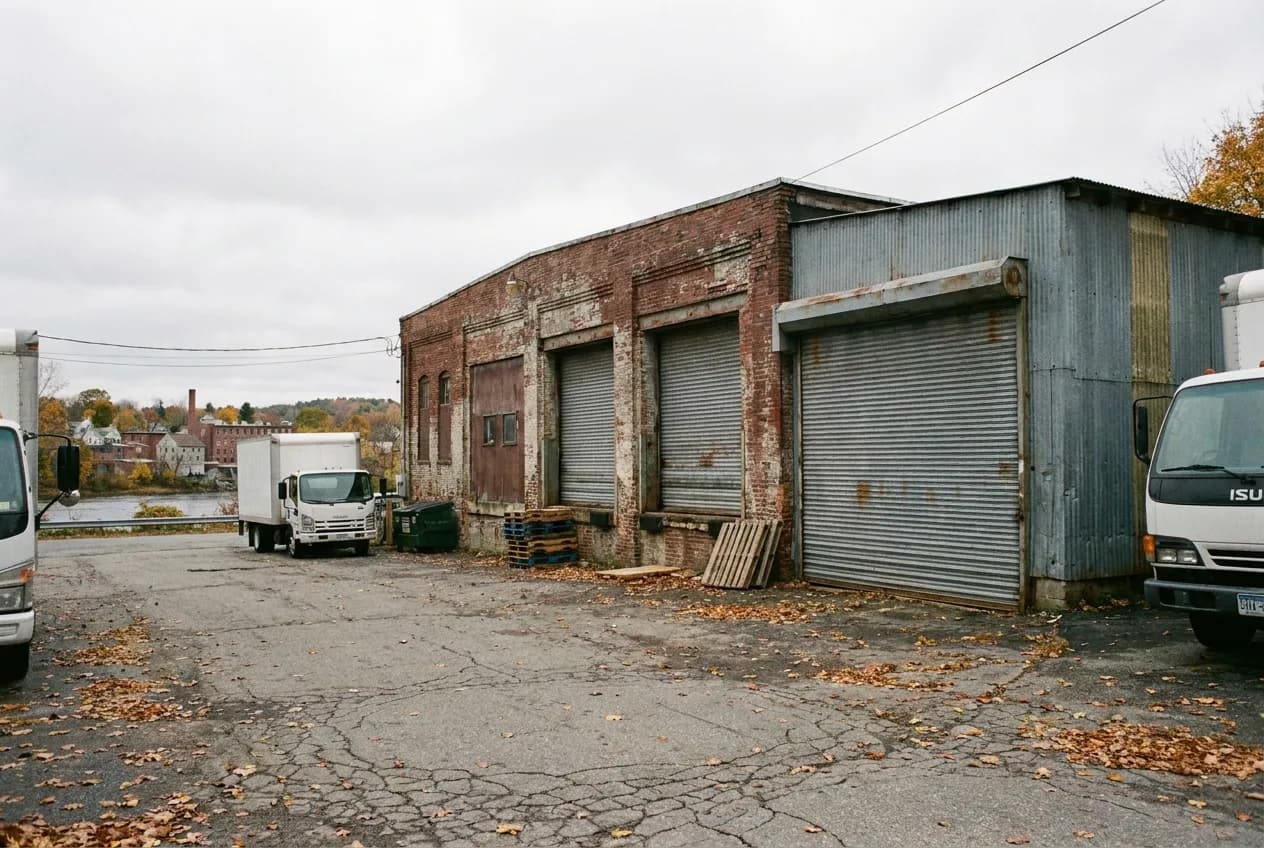
Vacant / Non-Performing

Sell a Vacant or Non-Performing Industrial Building

An empty or non-performing building does not stop costing you. Property tax at the industrial class, insurance, security, and a roof and mechanical systems that keep ageing all run whether or not a tenant is paying. Selling directly and off-market to a principal buyer takes the asset off your books without a listing, a sign, or a marketing process that reaches your market.

Off-Market & Confidential
A Direct Principal Buyer
No Listing Commissions
Any Condition or Situation

The Situation

What a Vacant or Non-Performing Building Actually Costs

A building can sit empty for a lot of reasons. A single tenant moved out or wound down. A lease expired and re-leasing has stalled. Operations consolidated into another site. A parent company decided the location no longer fits the plan. Whatever the reason, a vacant or non-performing industrial asset ties up capital and management attention while it earns nothing.

  • Empty after a tenant leaves

    A single-tenant building that loses its occupant goes from full income to zero overnight, and re-leasing a special-purpose or older facility can take far longer than anyone budgeted for.

  • Carrying costs keep running

    Property tax at the industrial or commercial class, insurance, security and monitoring, snow and grounds, and standby heat all continue on an empty building. The bleed is quiet but constant.

  • The building keeps ageing

    An unoccupied roof, mechanical systems, sprinkler and fire systems, and envelope deteriorate faster with no one inside to catch a small problem before it becomes a large one.

  • A drag on the wider plan

    A non-performing asset pulls down the return on a portfolio, complicates a refinance, and takes up management time that could go to the properties actually earning.

A Direct, Off-Market Sale

How Selling Direct Ends the Bleed

We are a principal buyer of industrial property. When you sell to us directly, you are dealing with the party that holds the capital and makes the decision, not a process that markets your building and hopes a buyer appears. For a vacant asset, that means a clean, quiet exit that ends the carrying cost.

  • Off-market and confidential

    No listing, no sign on the fence, no marketing that reaches your tenants, competitors, or the market. You explore a sale without signalling that the building is in play.

  • A direct principal buyer

    You deal with the decision-maker who holds the capital, not a broker running a process with no guaranteed buyer at the end of it.

  • No listing commissions or broker fees

    A marketed sale carries brokerage commissions and a marketing process. A direct sale to us does not.

  • Certainty and speed

    We control our own capital, so there is no financing condition tied to a lender's approval. We move once we have reviewed the property, and we close on a timeline that suits you.

  • Any condition, any situation

    Vacancy, deferred maintenance, roof or structural issues, an ageing envelope, low clear height. We underwrite the building as it stands instead of asking you to fix it first.

  • Flexible deal structures

    A straight purchase, a longer possession that lets you finish winding a location down, or another structure built around your situation.

Ontario & Alberta

The Provincial Picture on a Vacant Building

A vacant industrial building carries a different overlay in each province. The tax class, the zoning framework, and the title system all shape what an owner is holding while the building sits empty.

Ontario

In Ontario, an industrial building sits on employment lands, usually zoned in an employment-area or M category under the local official plan and the Planning Act. MPAC assesses the property and it is taxed in the industrial or commercial class, which does not pause because the building is empty. A long vacancy also affects insurance, since coverage terms and pricing change on an unoccupied building. Selling the asset ends the assessment and insurance exposure and hands the re-leasing and repositioning problem to a buyer set up to solve it.

Alberta

In Alberta, the same building sits in a municipal industrial zoning district, commonly an IB, IM, or IH category, and title is held in the Alberta Land Titles system. Municipal property tax continues on a vacant building, and a long vacancy carries the same insurance and deterioration exposure as anywhere else, with winter adding freeze risk to unheated space. A direct sale transfers title cleanly through Land Titles and takes the standby cost off your plate.

References: Planning Act (Ontario), MPAC, Alberta Land Titles.

Nothing on this page is legal, tax, insurance, or planning advice. Zoning categories, assessment, and tax rules vary by municipality and change over time. Confirm the specifics for your property with the municipality and your own advisers.

How It Works

A Direct Sale in Three Steps

  1. 1

    Tell us about the property

    Send the address, the building size and type, how long it has been vacant, and anything you already know about condition, tenancy history, and title. No listing, no obligation.

  2. 2

    We review and make an offer

    We underwrite the building and the situation as a principal buyer and come back with a clear offer. Because we hold our own capital, the offer does not depend on a lender's approval.

  3. 3

    Close on your timeline

    We structure the closing, including the title and any building diligence, around a date that works for you, and complete the purchase through a lawyer. The carrying cost ends at closing.

Common Questions

Vacant & Non-Performing Buildings FAQ

Do you buy vacant industrial buildings that need work?

Yes. Vacancy, deferred maintenance, an ageing roof or mechanical systems, and structural or envelope issues are the kinds of things we underwrite as a principal buyer. We look at the building as it stands and factor its condition into the offer rather than asking you to repair or restore it before a sale.

Can you buy a building with no tenant and no income?

Yes. We buy on the value of the real estate and its situation, not on in-place income, so a fully vacant building is squarely in what we buy. If the property is partly leased, we can work with that as well.

Do I need to clear the building out before selling?

Not necessarily. Leftover equipment, racking, or fit-out can often be dealt with as part of the transaction. Tell us what is in the building and what you would prefer to leave behind, and we will factor it into the offer and the closing.

Will a sale become public and reach my market?

A direct, off-market sale means no listing, no sign, and no marketing process. You can explore and complete a sale without signalling to tenants, staff, or competitors that the building is in play.

How quickly can this close?

Because we control our own capital there is no financing condition, so the timeline is driven by title work and the building diligence rather than a lender's approval. We close on a schedule that works for you and can move quickly once we have reviewed the property.

Get an Offer

Take the empty building off your books.

Tell us about the property and we will review it as a principal buyer and come back with a clear, off-market offer. No listing, no broker fees, no obligation.

CallGet Offer